What’s in a name? How Turnock Street got its name
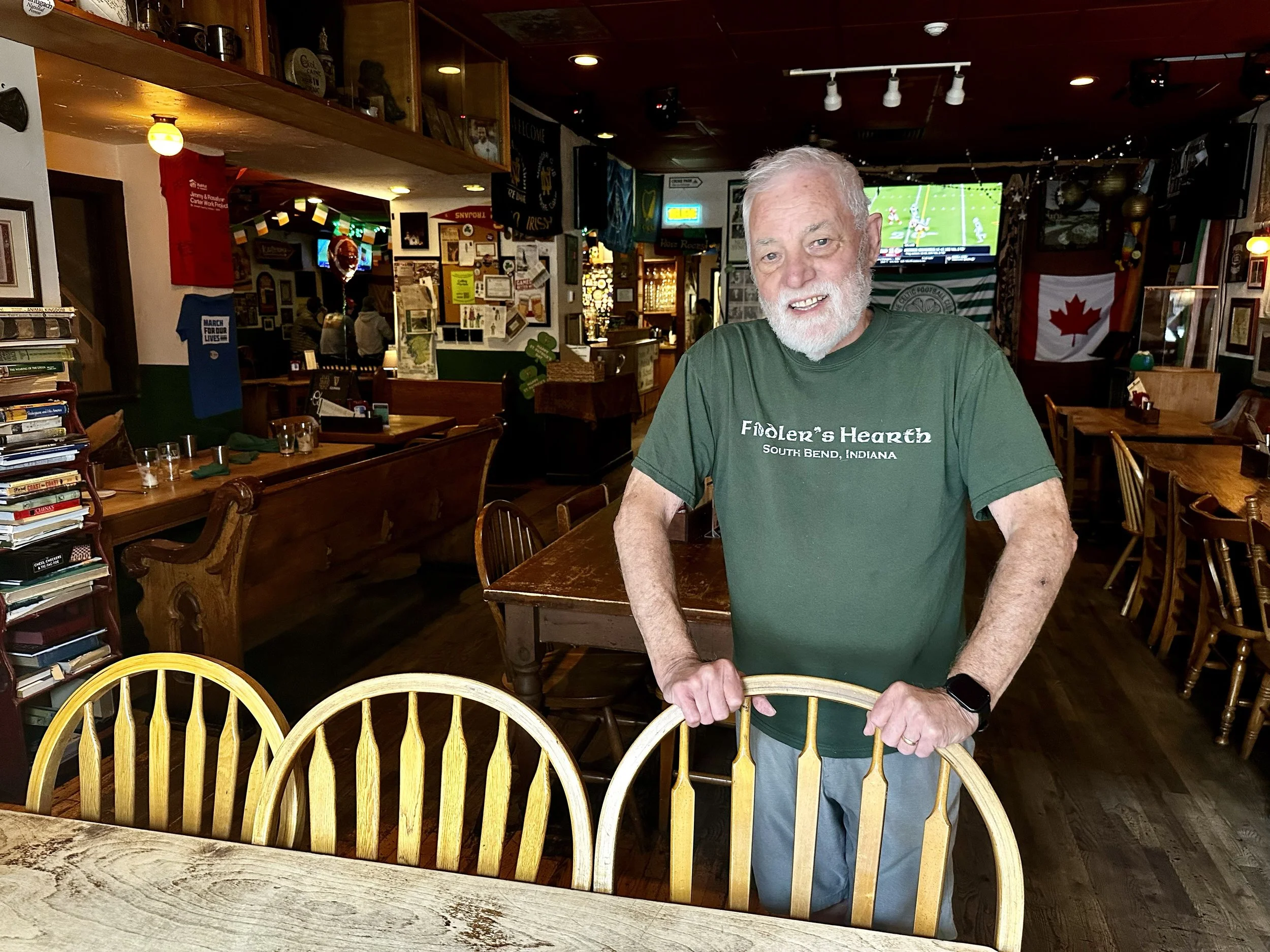
By Terrance Patrick Meehan, guest writer
South Bend’s Turnock Street is a narrow road that runs north and south between Corby Boulevard and South Bend Avenue. For a street that’s just one block long, little Turnock Street has a deep backstory—which just happens to be part of my family’s history.
For me, Turnock Street is an “I was here” sign left by my great-great-grandfather, Joseph Turnock. Called “Colonel Turnock” by the locals, Joseph was larger than life—a Civil War hero who served as St. Joseph County’s sheriff, South Bend’s fire chief, and the city’s chief of police.
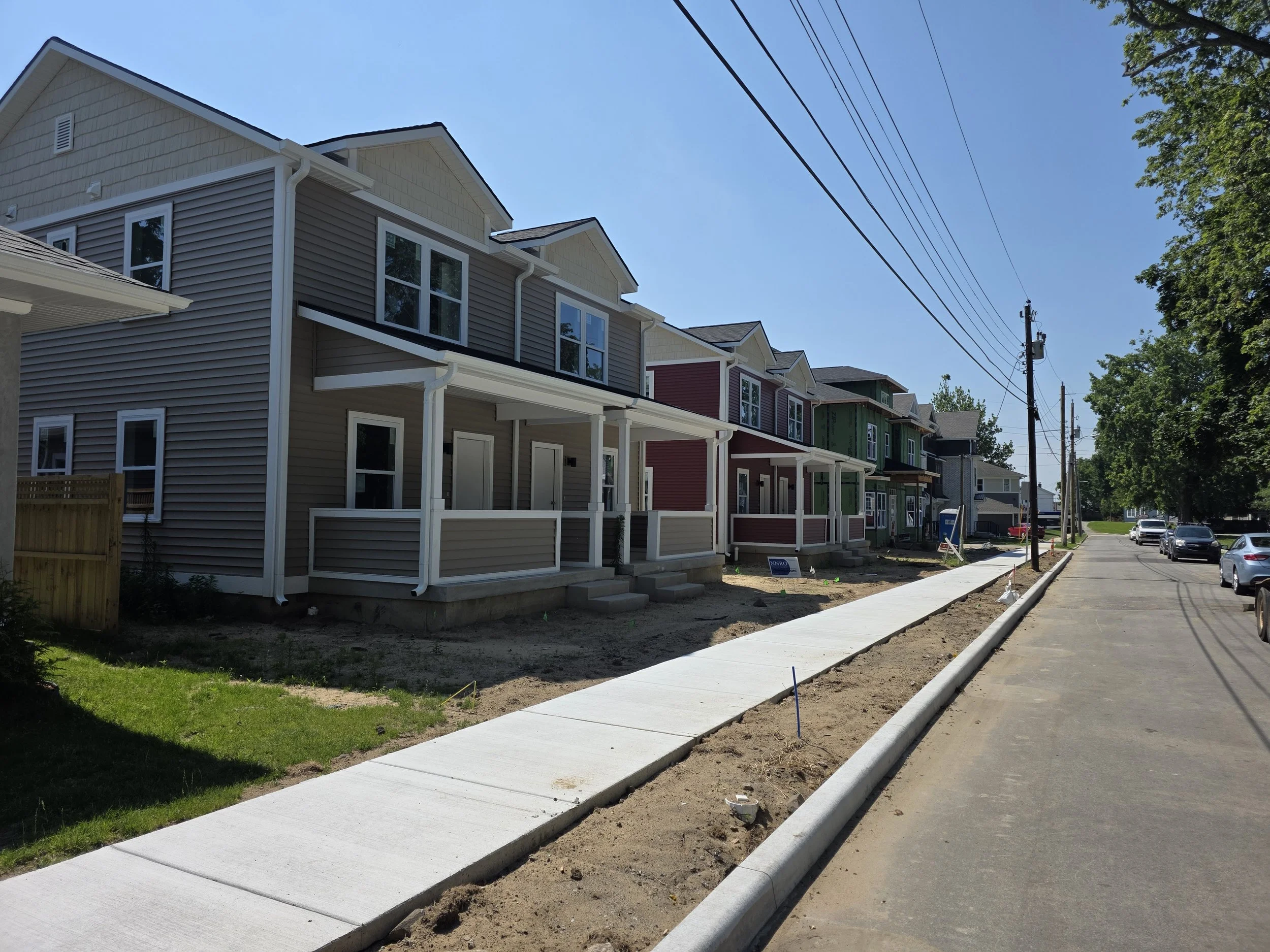
The NNRO and Habitat for Humanity recently built several single family homes on Turnock Street. The NNRO also added four new townhomes and a four-plex apartment building. (Photo by Kristin Givens, SBHF)
Born in England
Joseph was one of 13 children born to Benjamin and Mary Turnock. He was born in Stoke, Staffordshire, England on September 30, 1836. The family moved to America in 1840, settling in Jersey City, New Jersey, where Benjamin was a builder and contractor.
These were the pioneer days in America, and, in 1849, the family headed west to Indiana and purchased a farm near Mishawaka. Joseph worked the family farm until he turned 22. He then moved to South Bend to learn the plastering trade.
In 1859, he married Frances Cottrell. Joseph was building a successful contracting (construction) business and he and Frances were raising a young family—two girls—when the Civil War broke out.
The Civil War
In 1863, Joseph enlisted in the 12th Indiana Volunteer Cavalry and saw plenty of hard fighting—including the Battle of Mobile and a skirmish in Vienna, Alabama, where a horse was shot right out from under him. He earned the rank of Captain before returning home in 1865.
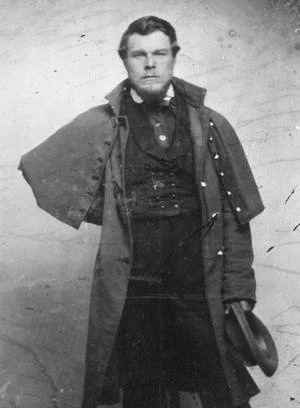
Pictured is Colonel Turnock.
Back in South Bend, Joseph picked up where he left off with his construction business, but didn’t leave military life entirely behind. He joined the state militia’s first veteran regiment, eventually rising to the rank of Lieutenant Colonel. As his business took off and his local roots deepened, he put his wartime leadership experience to work for St. Joseph County and South Bend.
Public servant
In 1872, Colonel Turnock was elected sheriff of St. Joseph County, serving two terms before coming back for a four-year stint as deputy sheriff. By 1882, he’d taken charge as chief of the South Bend volunteer fire department, where he remained a familiar face at department banquets and gatherings for years to come.
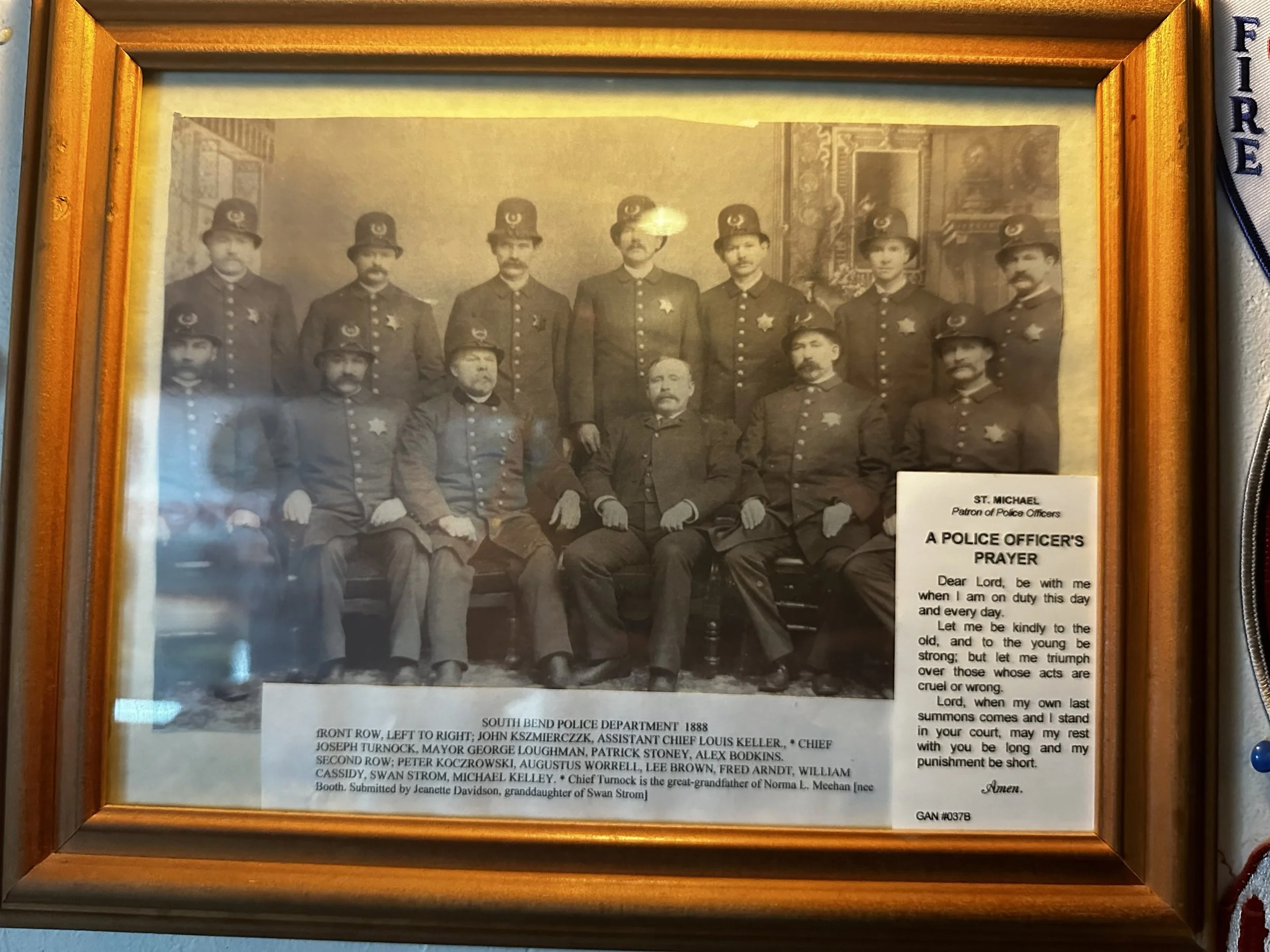
This photo, which hangs on a wall of Fiddler’s Hearth, depicts members of the South Bend Police Department. Joseph Turnock is pictured in the front row, the third from the left.
His public service didn't stop there. Turnock went on to serve as South Bend's city marshal and was named chief of police in 1899, leading the department for three years. In his later years, he kept giving back to the community—staying active with the Masons and managing local finances as treasurer for the South Bend Building and Loan Association.
Meanwhile, in 1892, he and his brother, Hiram, co-owner of the construction business, purchased undeveloped land between St. Pius Street (later renamed Hill Street) and Notre Dame Avenue. They had the county surveyor plat the land into 40 lots, which made up both sides of a block of St. Lewis Street (later spelled St. Louis) and the west side of a newly platted road—promptly named Turnock Street for the property owners.
Car accident
On June 6, 1913, Joseph, then 76, was driving south down Main Street in South Bend when traffic forced him to slow down near Washington Avenue, causing his car to stall on the streetcar tracks. Turnock jumped out to hand-crank the engine to start, but in his rush, he forgot to take the car out of gear.
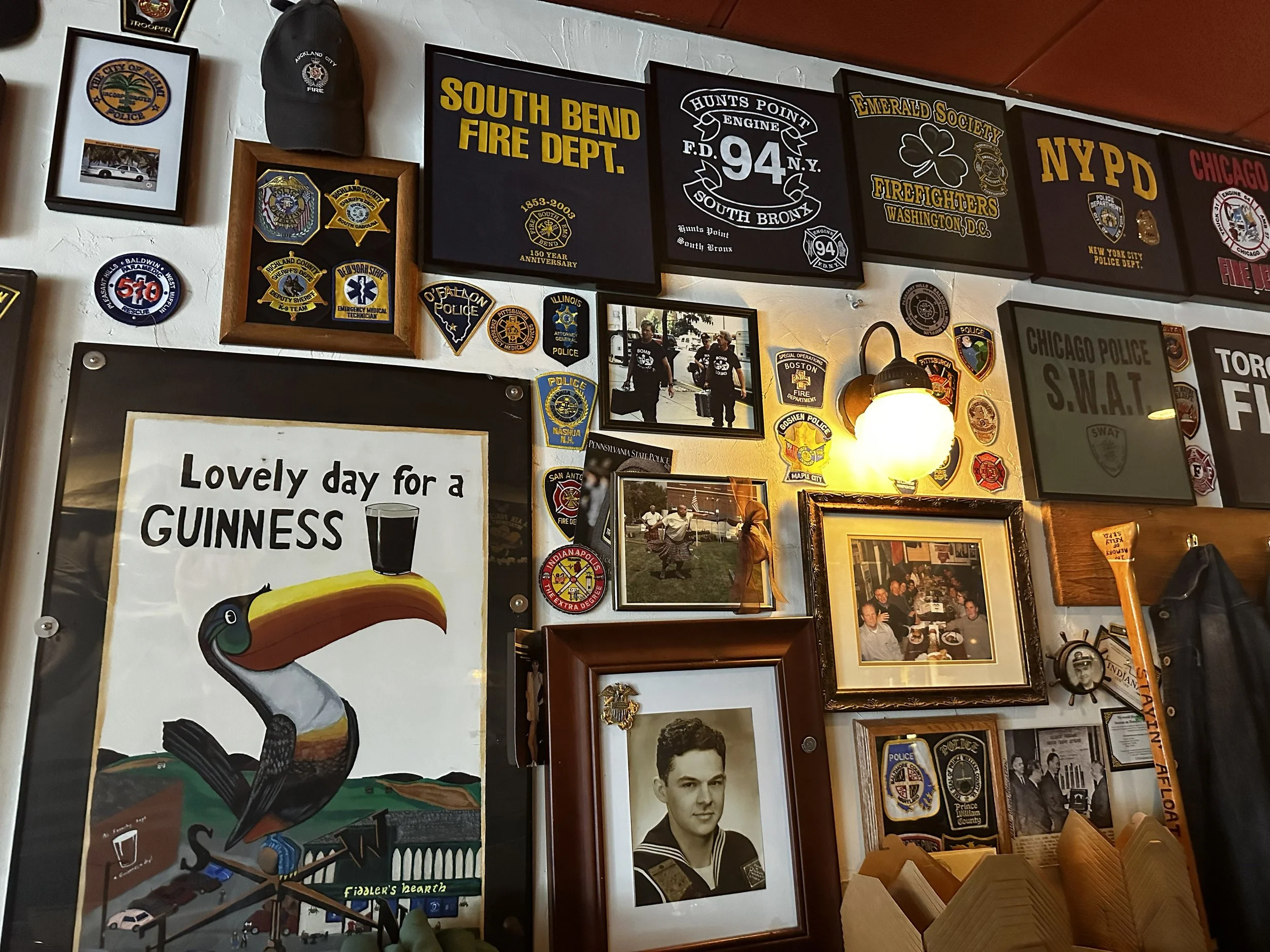
The room on the south end of Fiddler’s Hearth is dedicated to those in public service. There you will find a photo of Terry’s dad, bottom center, and his great-great-grandfather Joseph Turnock, among many, many other pieces of memorabilia.
The moment the engine fired up, his massive Buick touring car surged forward, running over him. Police rushed Colonel Turnock to Epworth Hospital, but he died from his injuries before he arrived.
What or who is behind a street name?
That’s the story of my great-great-grandfather. As you make your way through the Northeast Neighborhood and or elsewhere in St. Joe County, I challenge you to consider what or who is behind the names of our streets. You will likely uncover the stories of people in our region’s history who stepped up when called upon to serve others with their time, knowledge, and abilities. Like Joseph Turnock, they are real people who made real contributions to this region.
Editor’s note: The author of this article is Terry Meehan, a local historian and proprietor of Fiddler's Hearth—a popular restaurant and bar in downtown South Bend where locals gather amid the vintage historical photos displayed around the venue. One room is dedicated to first responders with patches from police and fire departments from around the world.